Category
Fintech
Client
Payabl.
Homepage Redesign Case Study
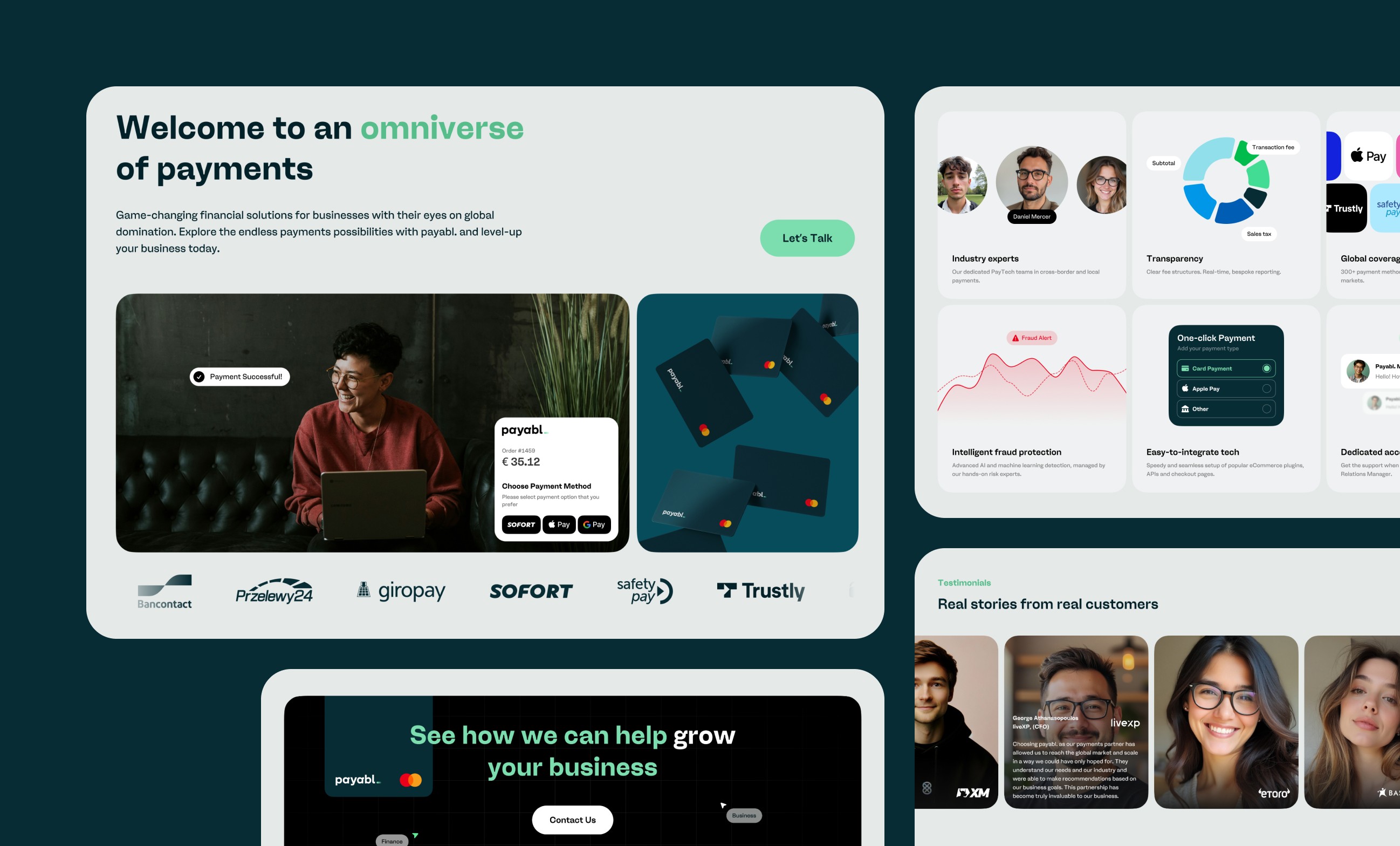
Redesign Within Existing Brand Constraints
This project focuses on redesigning the homepage of a complex fintech product within a predefined visual style and strict design constraints. The task was not to reinvent the brand, but to improve visual clarity, structure, and usability while fully aligning with existing brand guidelines and business goals.
The redesign was created as part of a design assignment and demonstrates my ability to work within established design systems and styles, delivering scalable and well-structured UI solutions without introducing arbitrary visual changes.
Visual Design & Constraints
→ Light theme from the example page
→ Existing layout logic and structure
→ Colours taken from the marketing kit
This ensured brand consistency while improving clarity, hierarchy, and visual balance.
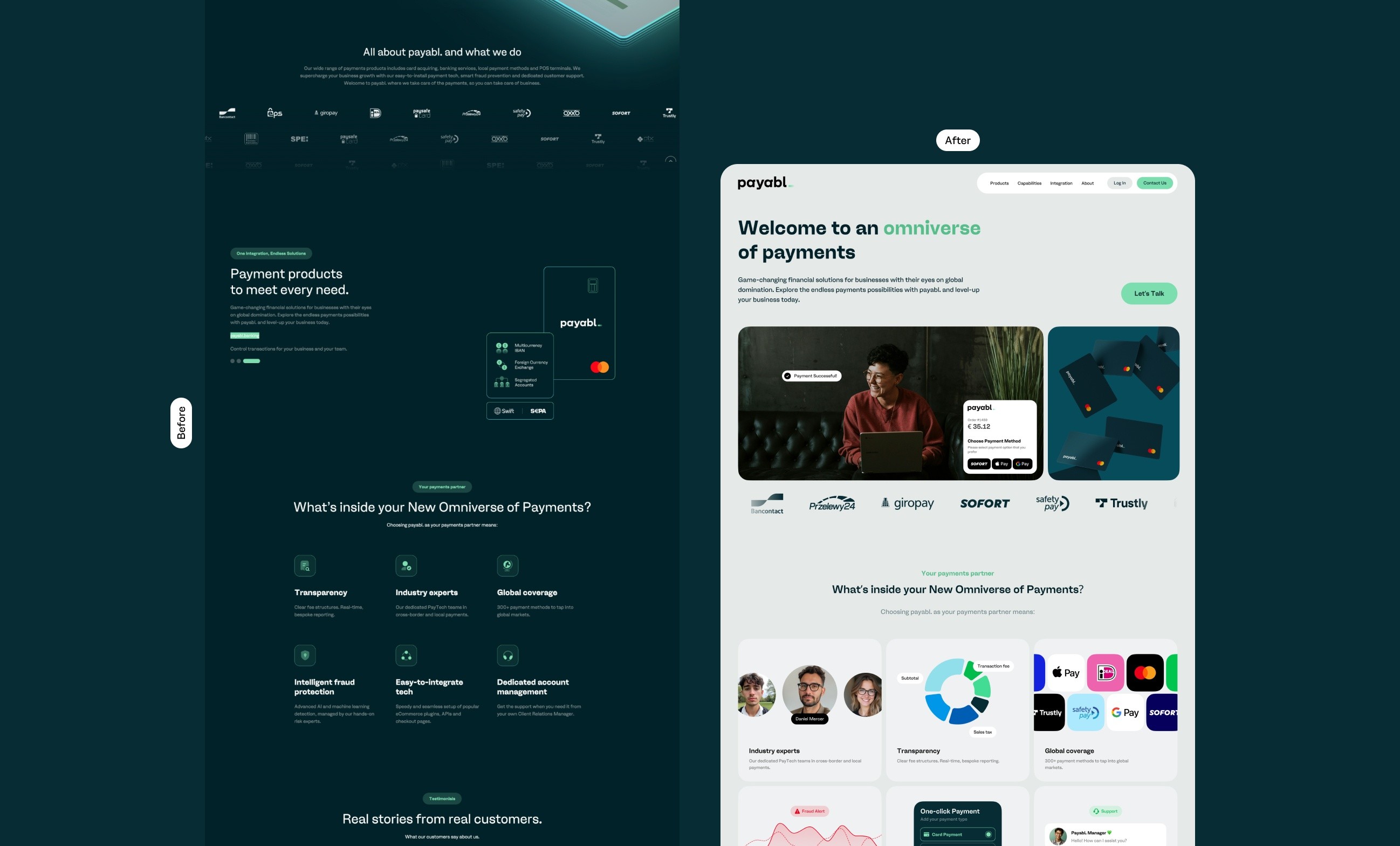
Challenge
The original homepage had a complex layout, overloaded sections, and a weak visual hierarchy. Key messages and actions were difficult to scan quickly, increasing cognitive load and reducing clarity.
Goals
→ Simplify the overall structure
→ Improve visual hierarchy and readability
→ Clearly highlight key value propositions
→ Make primary actions more visible
→ Create a scalable layout suitable for future growth
Design Approach
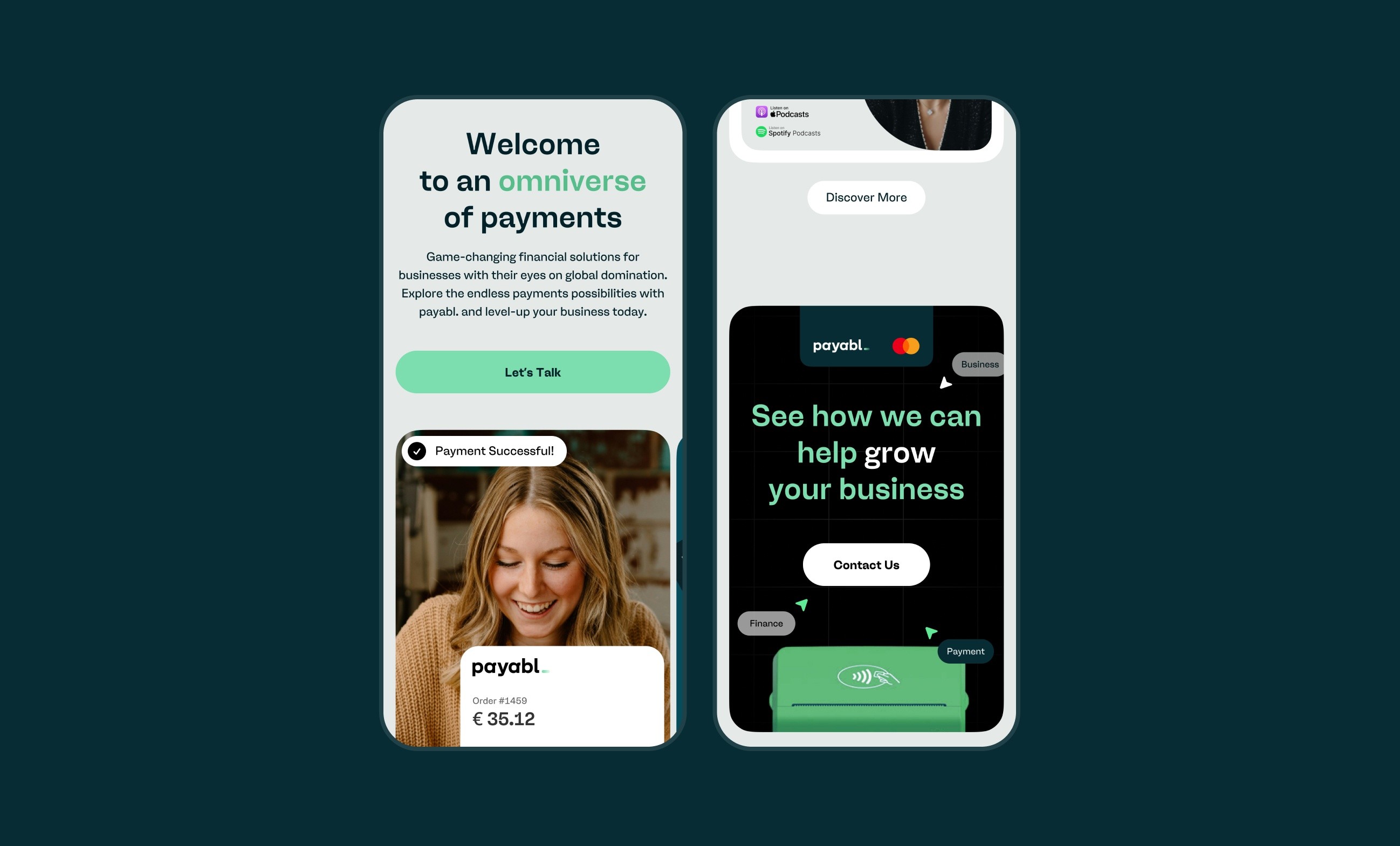
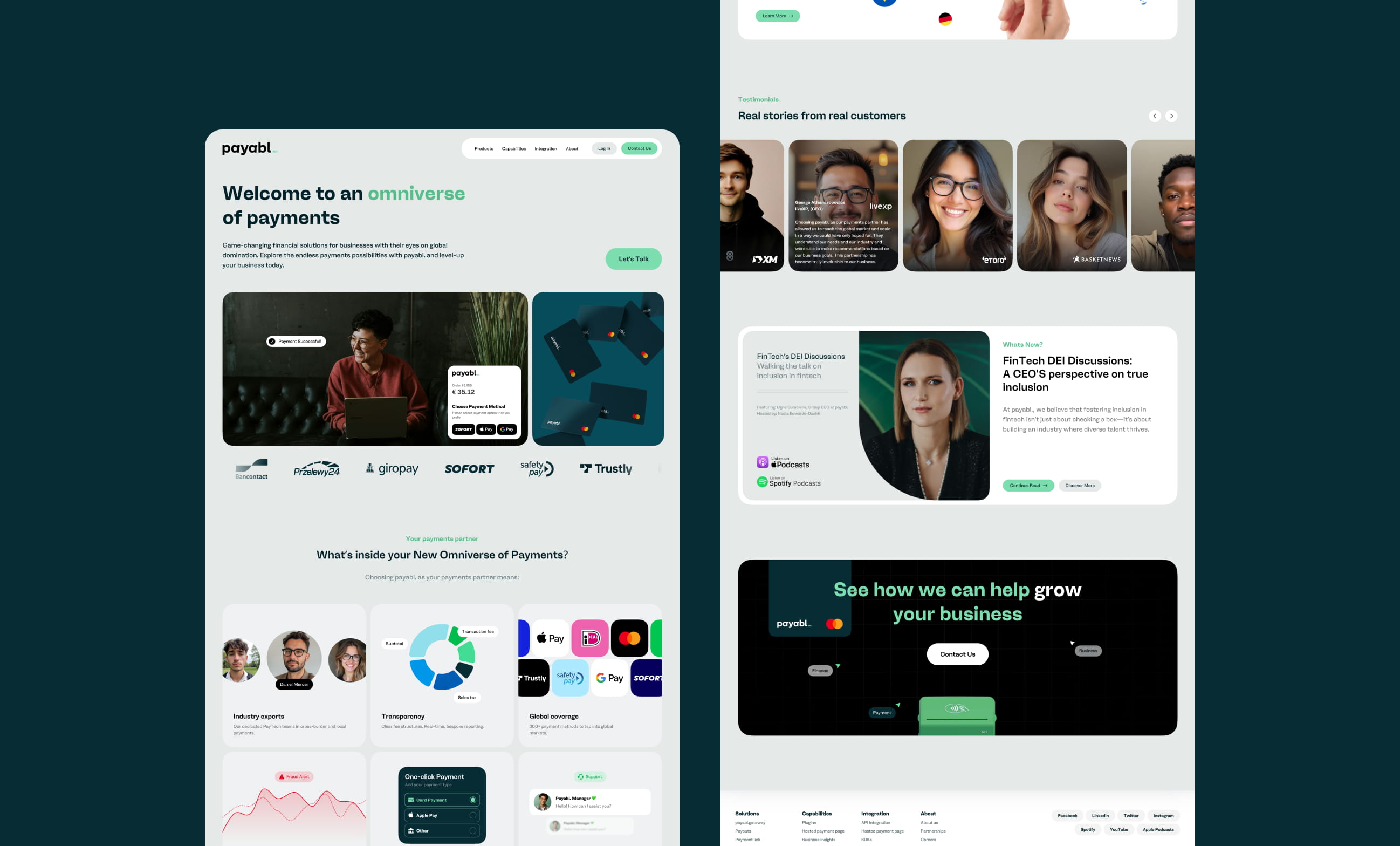
The redesigned homepage focuses on clarity, structure, and balance. Content is organized into clear sections with consistent spacing and hierarchy. Visual accents are used to guide attention to key messages and actions without overwhelming the user.
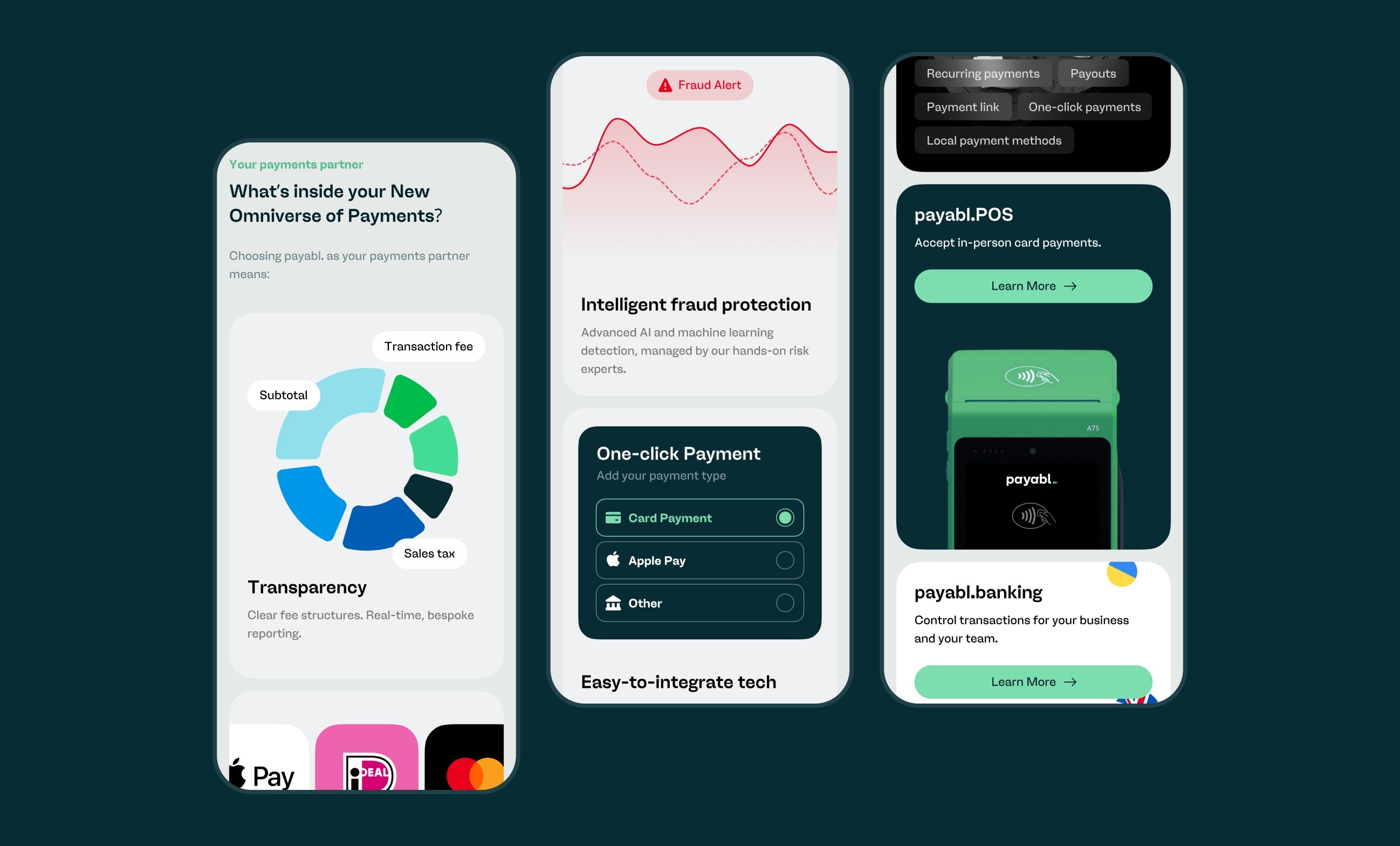
Competitor Analysis
As part of the design process, I conducted a competitor analysis to better understand common UI patterns, trends, and best practices in the fintech and payment industry.
In addition to the provided examples (Stripe, Adyen, Square), I expanded the research to include other relevant competitors. Competitors reviewed: Checkout.com, Revolut Business, Wise Business, Payoneer, Worldpay, Rapyd, Skrill, Nuvei, Neteller.
This analysis helped identify patterns that improve trust, usability, and content clarity on complex product websites.
Key Insights
01 Clients logos after the hero
Many competitors place client or partner logos immediately after the hero section, without heavy text. This creates instant credibility and social proof. Recognizable logos communicate trust and scale much faster than long descriptions.
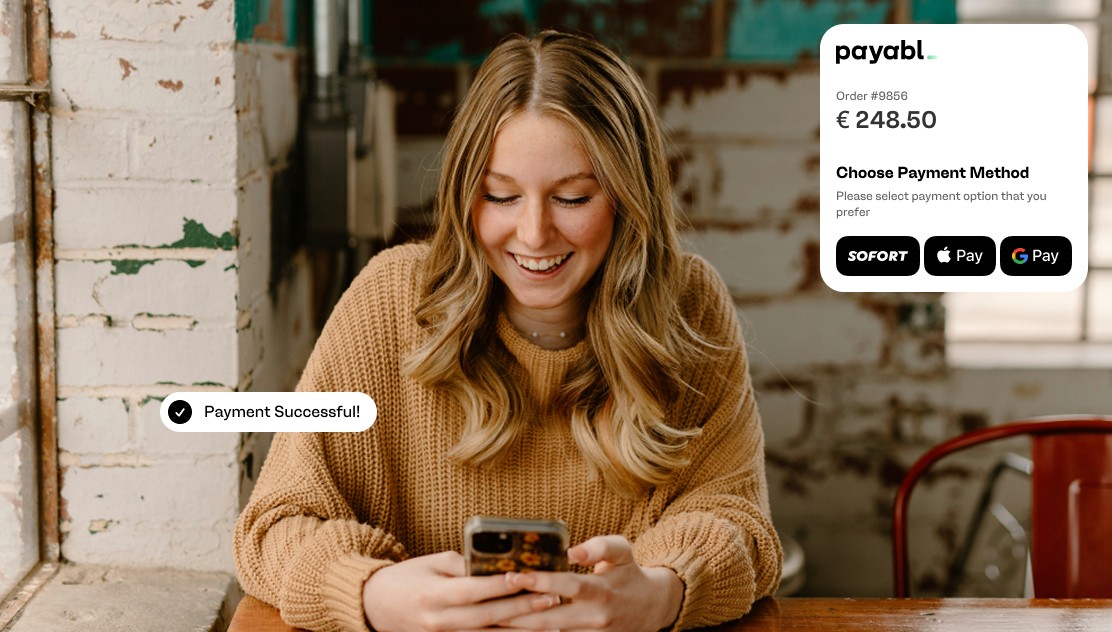
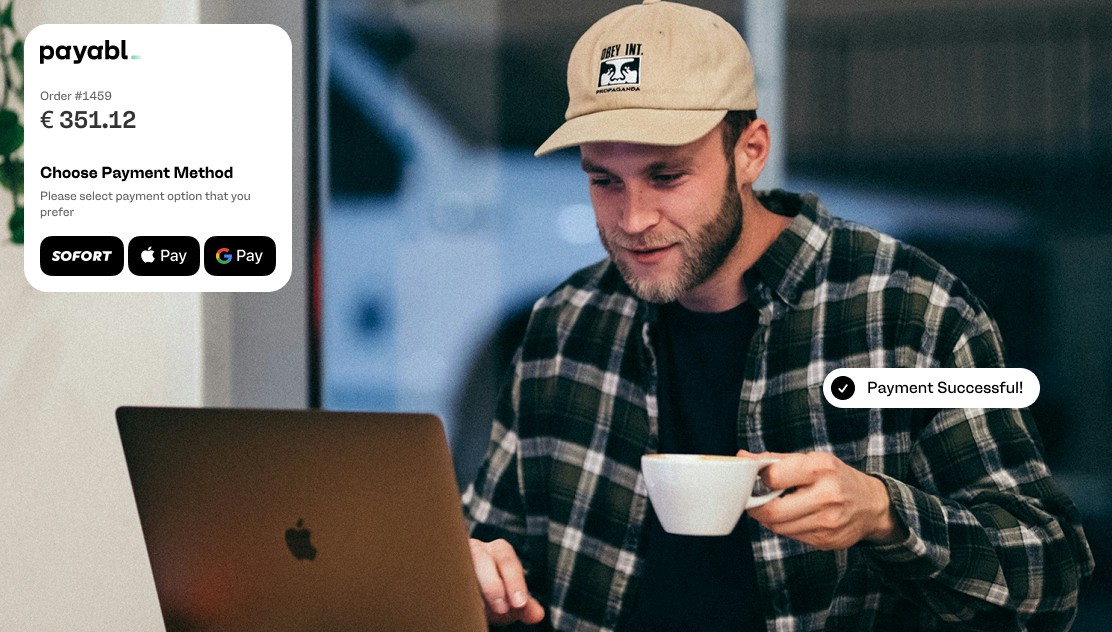
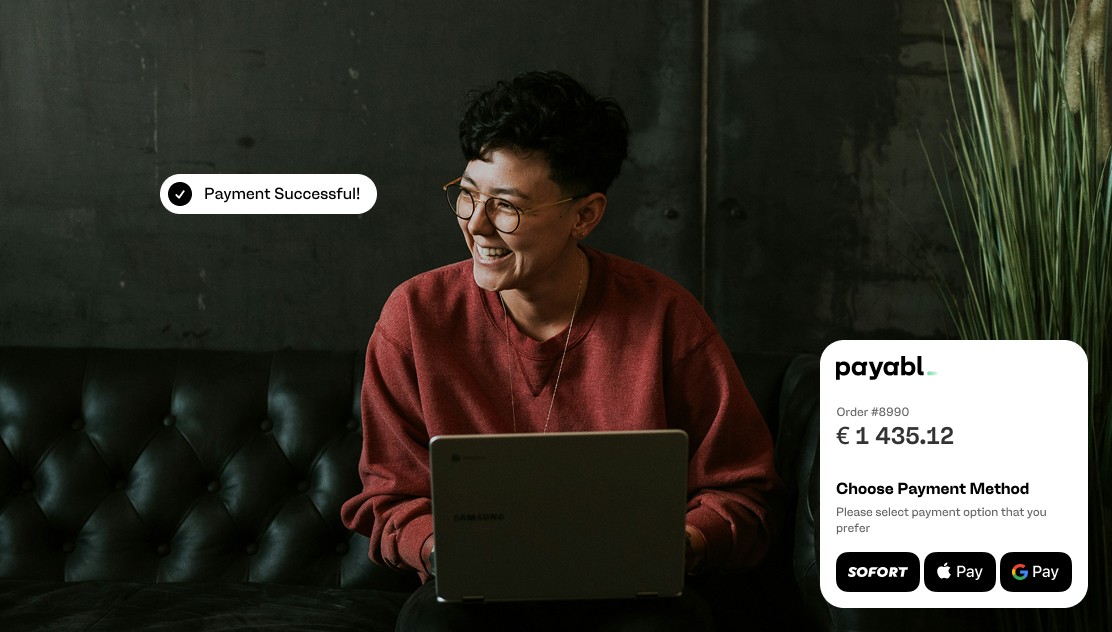
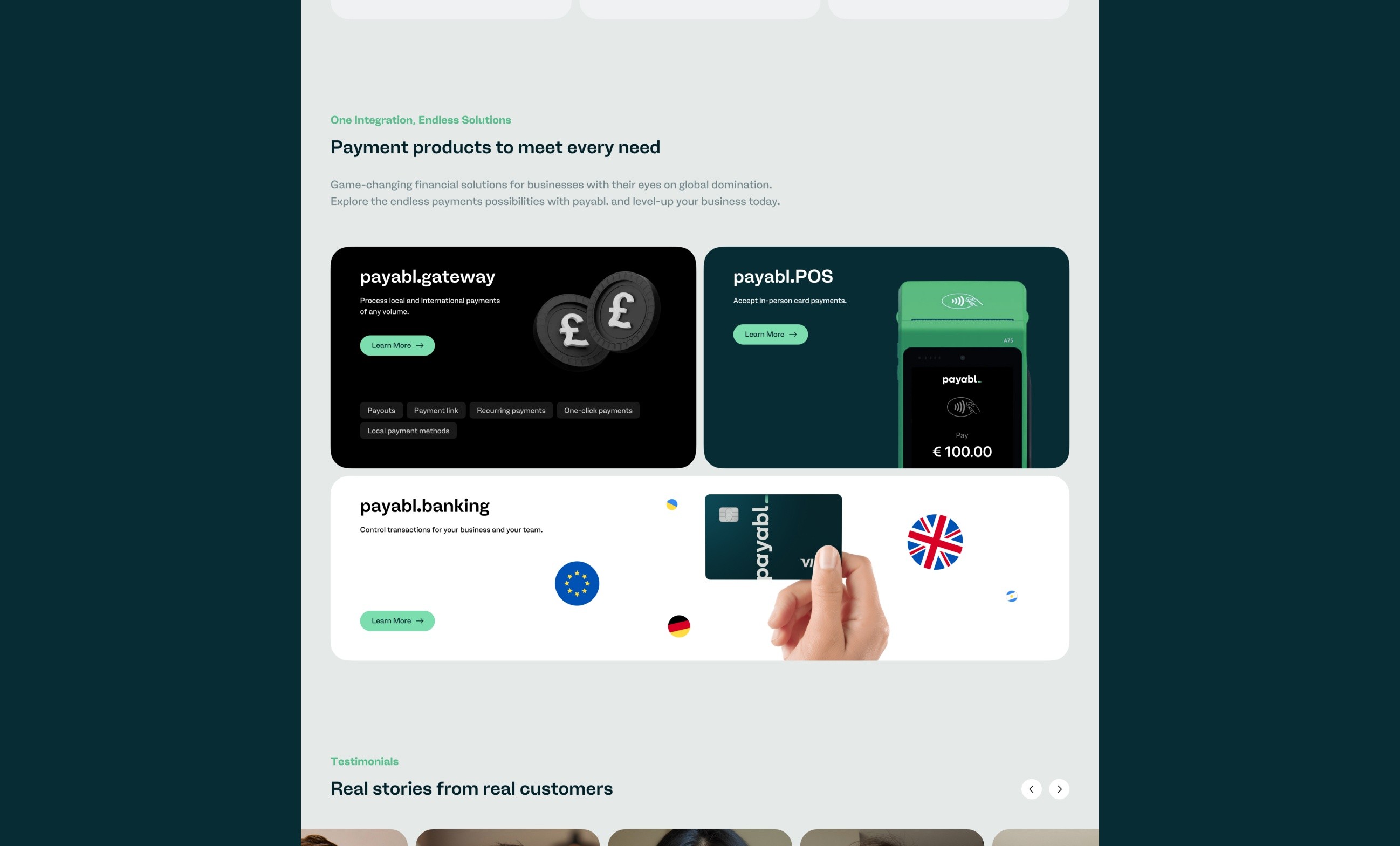
In this redesign, payment method logos are used instead of client logos. The same principle applies: users can quickly understand the range and reliability of payment options in a clear, scannable way, with minimal cognitive effort.
02 Avoiding horizontal scroll and pagination
Competitors avoid hiding products behind horizontal scrolls or pagination. Instead, content is presented in a simple vertical flow. This reduces friction and allows users to understand the offering without additional navigation decisions.
This insight was applied to keep key information visible within a clean vertical structure.
03 Testimonials with visual context
Text-only testimonials are rare among competitors. When testimonials are used, they are usually accompanied by photos and clear attribution. This adds authenticity, trust, and a human element to the interface.
This observation highlights the importance of visual credibility in B2B and fintech products.
Result
The final redesign delivers a clearer and more structured experience that helps users quickly understand the product’s value and navigate key content with less effort. Improved hierarchy, spacing, and content organization reduced cognitive load and made core actions easier to access, directly supporting user engagement and business conversion goals. At the same time, the redesign fully adheres to the existing brand guidelines, enhancing the page without introducing style inconsistencies.